
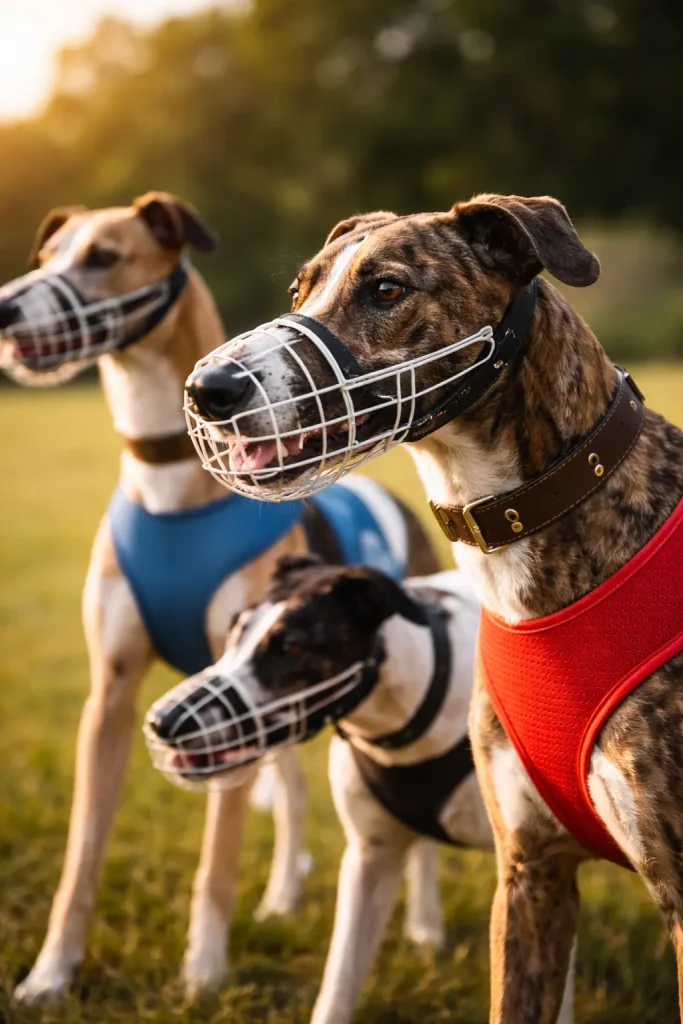
I live with two retired racers, Luna and Tank. They’re fast, gentle, and silly. They also play hard. Teeth fly in fun, but skin is thin. So a racing muzzle isn’t mean. It’s just smart.
I’ve used a few styles at our local straight racing club and during big yard zoomies with friends. Some days went smooth. Some days, I learned the hard way. Let me explain.
What I mean by “racing greyhound muzzle”
It’s that wire basket you see at the track. Long, narrow, and light. It lets the dog pant and drink. You can even slip small treats through the bars. Most are vinyl-coated wire. Some have a leather nose bumper. There’s also a plastic “box” style racers use.
If you want a deeper dive into styles and safety tips, the buying guide on Western Greyhound breaks everything down in plain English.
For those interested in formal welfare standards, the Greyhound Welfare & Integrity Commission publishes an excellent Industry Practice Guide on the muzzling of greyhounds that walks through fit checks, materials, and safety considerations.
Why not a regular pet-store muzzle? Those work for vet visits, sure. But during sprints, they run hot and can block airflow. My greyhounds need big air fast.
The one we keep reaching for: vinyl-coated wire with nose bumper
My go-to is a vinyl-coated wire racing muzzle with a leather nose bumper from Greyhound Supply. I also saw a similar one at a lure coursing meet, and it felt the same. For more on the motorized lure that keeps these sprints exciting, check out my hands-on review of a greyhound racing mechanical hare.
- Luna is 68 lb and wears the Standard size.
- Tank is 80 lb and needs the Large.
First outing with them was at a Sunday club meet. Both ran two 200-yard sprints and then chased the squeaky around the field. They panted hard but never struggled. They drank water with the muzzle on. I slipped tiny cheese bits through the front bars. No fuss.
What I liked:
- The bumper saved Tank’s nose when he face-planted on a turn. He hit the grass, popped up, and kept going.
- The vinyl coating is smooth. It doesn’t snag my clothes when I clip leads.
- Airflow is great. On a 90°F day, they still cooled down fast in the shade.
What bugged me:
- Tank got a rub spot under his chin on day one. I lined that area with moleskin and it stopped.
- The strap tail flapped and smacked the side. I added a tiny elastic band (hair tie). Problem solved.
- It does clack when they boop each other. Not loud, just a tap-tap sound.
Price-wise, I paid about what you’d expect for a racing muzzle. Not cheap, not fancy. If you’re still comparing models, the Slaneyside roundup of the best greyhound muzzles offers quick side-by-side photos and sizing notes that can help you decide.
The plastic “box” muzzle: great for winter, odd in summer
I tried a white plastic box muzzle for cold days. It’s light and warm to the touch. No icy feel on the nose. My yard is windy in January, so this mattered to me.
Real talk from week three: Tank shook his head and the snap buckled loose. I swapped the snap for a Chicago screw (little metal post) I had in my tack box. It never popped again.
- Good: no wire on skin, and the shape sits well on long noses.
- Not great: in damp cold, breath fog built up inside. It didn’t stop him, but I kept wiping it with my sleeve.
- Odd: it made a louder “thunk” when they bumped. Harmless, just funny.
I still use it in winter. In summer, I go back to the wire.
The Baskerville Ultra I already owned… and why it’s not for sprints
I’ve had a Baskerville Ultra Muzzle from our adoption days. It’s fine for vet care, nail trims, or city walks. Super easy to fit. But when I tried it for lure practice, Luna ran hot. The basket sits a bit shorter, and even with the front opening, it didn’t breathe like the racing one. She panted harder. I pulled her after one run and switched back to the wire.
So yeah, I keep it. Just not for fast work.
Fitting lessons I learned the messy way
You know what? Fit is half the battle. A good muzzle feels boring. It just sits there.
Here’s what saved me time:
- Two-finger rule: I keep two fingers snug under the neck strap. Not tight, not loose.
- Eye line: The top bar rests below the eyes. If it rides up, I adjust or size up.
- Whisker pad check: I run my finger along the whisker bed. No sharp edges, no pinches.
- Pant test: I let them do three big yawns with the muzzle on. If it looks cramped, it is.
- Quick fix: Moleskin or a thin foam bumper helps hot spots. I keep both in the gear bag.
Sizing note: “Standard Greyhound” often fits girls and smaller males. Big boys like Tank may need Large. When in doubt, I measure snout length from stop to tip and send the shop a photo. The greyhound shops are used to this and they’ve helped me get it right.
A day at the park: six greys, one squeaky, zero drama
Last month we met at the fenced soccer field. Six greys. We all used racing muzzles—wire or box. They did the classic “shoulder bash,” then zoomed like jets. One girl squeaked at a toy and four others sprinted over. A good muzzle turns that sudden “hey!” into nothing more than noisy play. No nicks, no vet bill, just zoomies.
An older man walked by and said, “Are they bitey?” I smiled and said, “Nope, just careful.” He watched for five minutes, then laughed when Luna tossed the squeaky right into her own muzzle.
Little care tips that made life easier
- Wash with mild dish soap and warm water. Rinse well. Air dry in the garage.
- Check rivets and straps monthly. I tug each one. Quick and boring, which is the point.
- In heat, I dunk the muzzle in cool water before a run. It feels nice on the nose.
- In cold, the plastic box feels kinder. The wire can be chilly at first.
- For race days, some handlers tether the muzzle to the collar with a tiny zip tie as backup. I’ve done it once with Tank. Belt and suspenders.
The good, the bad, the honest
What I love about racing muzzles:
- They let my dogs be fast and safe.
- They can pant, drink, and take tiny treats.
- They’re tough and don’t weigh much.
What bugs me:
- People think muzzles mean “mean dog.” I get it. I explain. Then I let them toss a treat through the bars. Minds change.
- Rubbing can happen. Padding fixes most of it.
- The strap hardware on cheaper ones can be flimsy. I upgrade if I need to.
So, which one would I buy again?
The vinyl-coated wire racing muzzle with a leather bumper is my pick. It breathes well in summer, protects noses, and holds up to weekly runs. For winter, I keep the plastic box muzzle handy. The Baskerville stays in the “vet and errands” bag.
If you’ve got a retired racer, or you host greyhound playdates, or you do straight racing, I’d say yes—get a true racing muzzle. Your dog can still smile with their eyes. And you can relax while they fly.
During cool-down chats, our greyhound crowd often drifts from dog gear into all sorts of lively personal tales. If you enjoy reading candid adult narratives once the hounds are snoozing, the thoughtfully curated collection of sexting stories offers entertaining, real-world text exchanges you can browse for a fun behind-the-scenes peek at modern flirting lore.
For readers around the Seattle area who’d rather skip straight to an in-person adventure after the zoomies, the directory at TS escort Lynnwood connects you with verified transgender companions in Lynnwood, complete with detailed profiles, photos, and simple booking options so you can plan a memorable night out with confidence.
—Kayla Sox